Commodity Supercycles: Understanding 20-Year Bull and Bear Markets
Learn about commodity supercycles — 15-20 year bull and bear phases driven by supply constraints, demand shifts, and structural underinvestment in physical resources.
What Is a Commodity Supercycle?
A commodity supercycle is a prolonged period — typically 15 to 20 years — during which commodity prices trend structurally higher (or lower) across the entire complex, from energy to metals to agriculture. Unlike short-term price spikes driven by weather events or supply disruptions, supercycles are powered by fundamental imbalances between supply and demand that take years to resolve. History has recorded four major upward supercycles since 1900: the industrialization boom of the early 1900s, the World War II rearmament era, the 1970s oil shock period, and the 2000s China-driven commodity boom. Each was triggered by a step-change in demand — urbanization, militarization, or the emergence of a massive new consumer economy — running headlong into supply infrastructure that could not scale fast enough. Identifying where we stand in the current supercycle is one of the most consequential calls a macro investor can make.
The Supply Constraint Mechanism
Supercycles are fundamentally supply stories. During periods of low commodity prices, producers cut capital expenditure, mines close, exploration budgets evaporate, and the industry sheds skilled labor. This underinvestment creates a supply deficit that is invisible during periods of weak demand but becomes acute when demand recovers. The cruel irony of commodity markets is that the solution to high prices — increased supply — takes 5 to 15 years to materialize because building a new copper mine, oil field, or LNG terminal requires enormous upfront capital and years of permitting and construction. This lag between the demand signal and the supply response is what creates the multi-year trending moves that define supercycles. The current setup is notable because ESG mandates and regulatory hurdles have added entirely new barriers to commodity supply expansion, potentially extending the duration of supply deficits beyond historical norms.
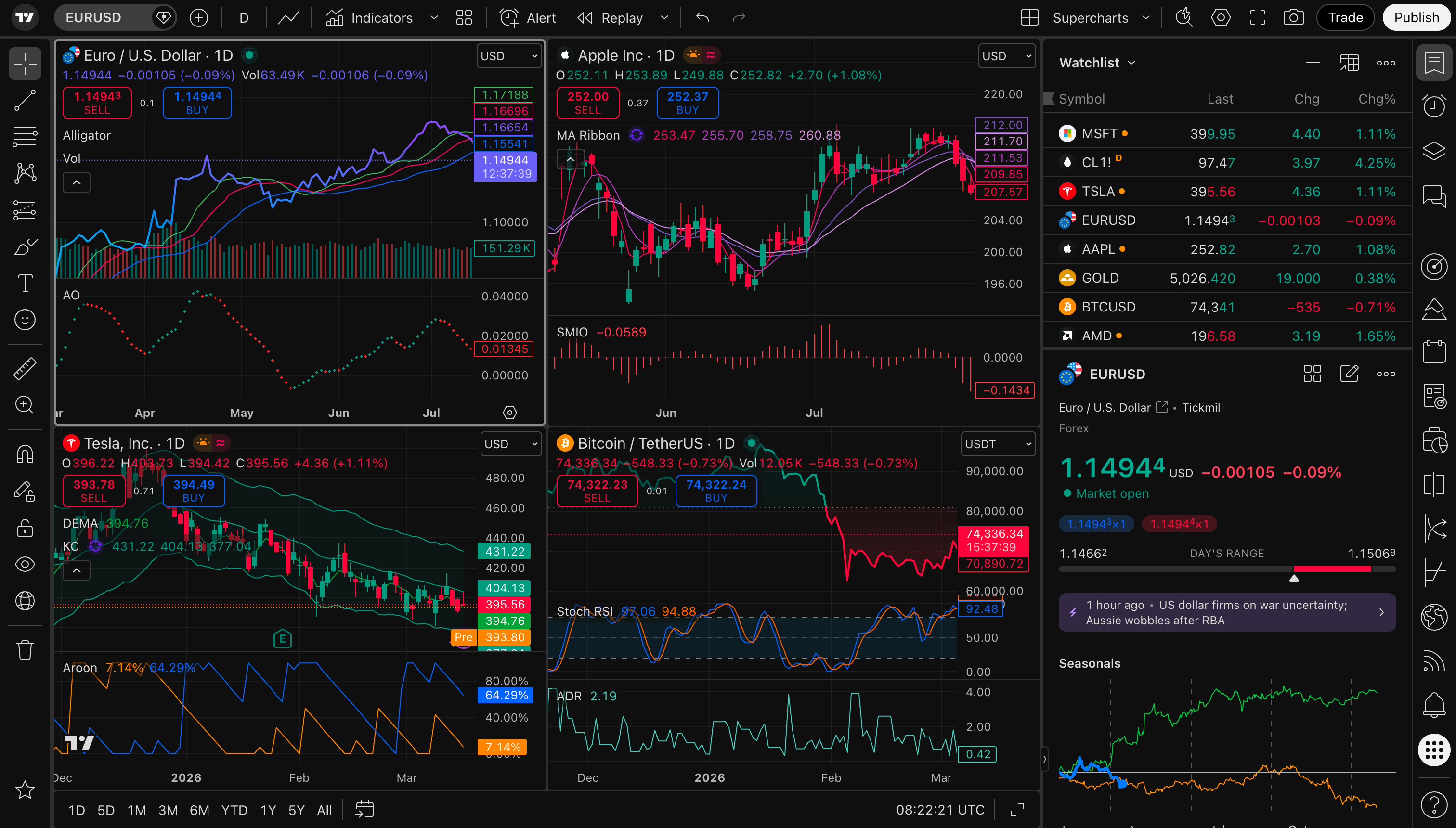

Free charts, alerts, and screeners for every asset discussed on this page. Used by 50M+ traders.
Energy, Metals, and Agriculture: Different Dynamics
While supercycles tend to lift the entire commodity complex, the three major sectors — energy, metals, and agriculture — are driven by distinct fundamentals. Energy commodities (crude oil, natural gas, coal) are dominated by geopolitics, OPEC policy, and the energy transition timeline. Industrial metals (copper, aluminum, nickel, lithium) are driven by infrastructure spending, electrification, and manufacturing cycles. Precious metals (gold, silver) respond to monetary policy and safe-haven flows. Agricultural commodities (wheat, corn, soybeans) are uniquely weather-dependent and face growing pressure from climate change, water scarcity, and population growth. A key insight for portfolio construction is that these sectors are not perfectly correlated, so a diversified commodity allocation captures the supercycle tailwind while reducing single-commodity risk. Investors who concentrate in one sector — for instance, energy only — may miss the supercycle's biggest winners.
Commodities as an Inflation Hedge
Commodities are the only major asset class with a reliably positive correlation to unexpected inflation. This makes intuitive sense — rising commodity prices are a primary input into the inflation statistics themselves. When oil, food, and metals prices surge, CPI follows. During the 1970s stagflation, the S&P Goldman Sachs Commodity Index delivered annualized returns exceeding 20% while stocks and bonds both lost real value. During the 2021-2023 inflation episode, commodities again outperformed, with energy leading the way. However, the inflation-hedging property is not uniform across all environments. Commodities are excellent hedges against supply-driven inflation and demand-driven overheating, but they perform poorly during deflationary recessions when demand collapses. The optimal macro setup for commodity allocation is early-to-mid cycle expansion with rising inflation expectations — when the economy is strong enough to sustain demand but central banks have not yet tightened aggressively enough to crush it.
Investing in Commodities: Vehicles and Considerations
Gaining commodity exposure is more nuanced than buying stocks or bonds. Direct commodity investing through futures contracts involves contango and backwardation — the shape of the futures curve can create significant positive or negative roll yield that dramatically affects total returns independent of spot price moves. ETFs that track commodity indices (like Bloomberg Commodity Index or S&P GSCI) face the same roll yield issue. Commodity equities — mining stocks, energy producers, agricultural companies — offer leverage to commodity prices but introduce company-specific risks like management quality, balance sheet health, and jurisdictional risk. Physical ownership is practical for precious metals (gold bars, coins) but impractical for crude oil or wheat. The most sophisticated approach combines commodity futures (for pure price exposure), commodity equities (for leveraged upside), and physical precious metals (for tail risk hedging), weighted according to your view on where we are in the supercycle.
Free charts, alerts, and screeners for every asset discussed on this page. Used by 50M+ traders.
Related Topics
Track These Indicators Live
The Alphameter synthesizes six macro indicators into a single regime score — updated daily. See the current reading and full indicator breakdown on the dashboard.
Get notified when the market regime changes
Regime alerts + weekly macro brief. Unsubscribe anytime.