Hedging with Options: Portfolio Insurance Strategies
Master options hedging strategies including protective puts, collars, put spreads, and VIX-based timing to protect your portfolio cost-effectively.
Why Hedge with Options
Options provide the only way to create a defined-risk floor under your portfolio while maintaining unlimited upside exposure. Unlike stop-loss orders, which can gap through your exit price during a crash, a protective put guarantees a specific worst-case outcome regardless of how fast or far the market falls. This insurance property is uniquely valuable during tail events when liquidity evaporates and stop losses fail. The trade-off is cost: options premiums are an ongoing drag on returns, and over long periods the cumulative cost of continuous hedging can significantly erode performance. The challenge is not whether to hedge, but how to hedge efficiently.
Protective Puts and Collar Strategies
The simplest hedge is the protective put — buying a put option on your equity position to define a maximum loss. A put struck 10% below the current price costs less than an at-the-money put but still protects against catastrophic drawdowns. The collar strategy reduces the cost of the protective put by simultaneously selling an upside call, capping your gains in exchange for cheaper downside protection. A zero-cost collar sets the call strike such that the premium received exactly offsets the put cost, creating a free floor with a ceiling. Collars are ideal when you expect modest returns and want to eliminate tail risk without paying for it.
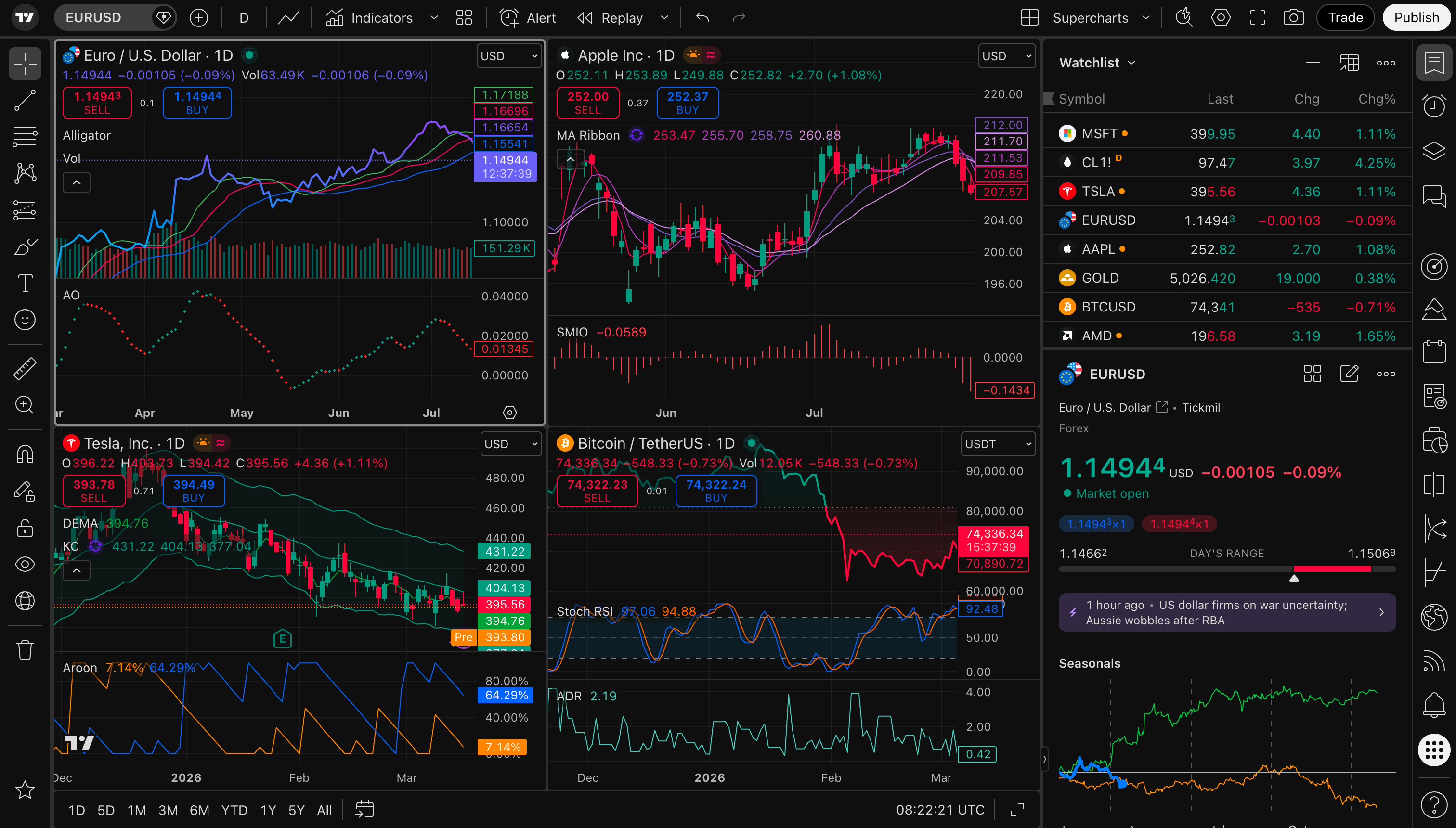

Free charts, alerts, and screeners for every asset discussed on this page. Used by 50M+ traders.
Put Spread Hedges
A put spread — buying a higher-strike put and selling a lower-strike put — reduces the cost of hedging by accepting a limited range of protection. For example, buying the 95 put and selling the 85 put protects you between a 5% and 15% decline but leaves you exposed below 15%. This structure is appropriate when you want crash protection but consider a true catastrophic event unlikely enough that you are willing to accept the gap. Put spreads typically cost 40 to 60 percent less than outright puts, making them sustainable for ongoing systematic hedging programs. The trade-off is explicit: you are insuring against a moderate crash, not Armageddon.
VIX-Based Timing for Hedge Purchases
Options are cheapest when the VIX is low — precisely when investors feel least need for protection but when protection offers the best value. Buying puts when VIX is below 15 is dramatically cheaper than buying the same protection when VIX is at 30 or higher. The contrarian insight is that the best time to buy insurance is when nobody wants it. Monitor VIX term structure as well: when the curve is in steep contango, near-term hedges are relatively cheap compared to longer-dated options. A disciplined approach is to allocate a fixed annual budget to hedges and deploy it opportunistically when implied volatility is depressed, rather than panic-buying protection during selloffs when it is most expensive.
Common Hedging Mistakes
The most frequent mistake is over-hedging — spending so much on protection that the drag destroys portfolio returns even in good years. A hedge that costs 3% annually needs to prevent more than 3% in average annual losses to be worthwhile, and most continuous hedging programs fail this test over long periods. Another mistake is hedging the wrong risk: buying equity puts when your real exposure is to interest rates or credit spreads. Always match the hedge instrument to the actual risk factor. Finally, avoid rolling hedges mechanically at expiration without reassessing. Each roll is a fresh decision that should incorporate current volatility levels, regime signals, and the cost-benefit calculation for the next period.
Free charts, alerts, and screeners for every asset discussed on this page. Used by 50M+ traders.
Related Topics
Track These Indicators Live
The Alphameter synthesizes six macro indicators into a single regime score — updated daily. See the current reading and full indicator breakdown on the dashboard.
Get notified when the market regime changes
Regime alerts + weekly macro brief. Unsubscribe anytime.