Tactical vs Strategic Asset Allocation: Finding the Right Balance
Compare tactical and strategic asset allocation approaches, learn when each works best, and how to combine them for superior risk-adjusted returns.
Strategic Asset Allocation Defined
Strategic asset allocation sets long-term target weights based on your risk tolerance, time horizon, and return objectives, then rebalances periodically to maintain those targets. A classic example is the 60/40 stock/bond portfolio that rebalances quarterly back to target weights regardless of market conditions. The intellectual foundation is modern portfolio theory: diversification across low-correlation asset classes produces the best risk-adjusted returns over long horizons, and attempting to time markets adds more noise than signal. Strategic allocation works because it enforces a contrarian discipline — rebalancing forces you to sell assets that have risen and buy assets that have fallen, systematically buying low and selling high at the asset class level.
Tactical Asset Allocation Defined
Tactical asset allocation deviates from strategic targets based on shorter-term views about relative asset class attractiveness. These deviations are typically bounded — a tactical overlay might shift equity exposure plus or minus 15 percentage points from the strategic target based on valuation, momentum, or macro signals. The goal is to improve returns or reduce risk over intermediate horizons of months to a few years. Regime-based allocation is one form of tactical management. Tactical approaches require a framework for generating signals, rules for sizing deviations, and a discipline for returning to strategic weights when signals normalize. Without this structure, tactical allocation degenerates into emotional market timing.
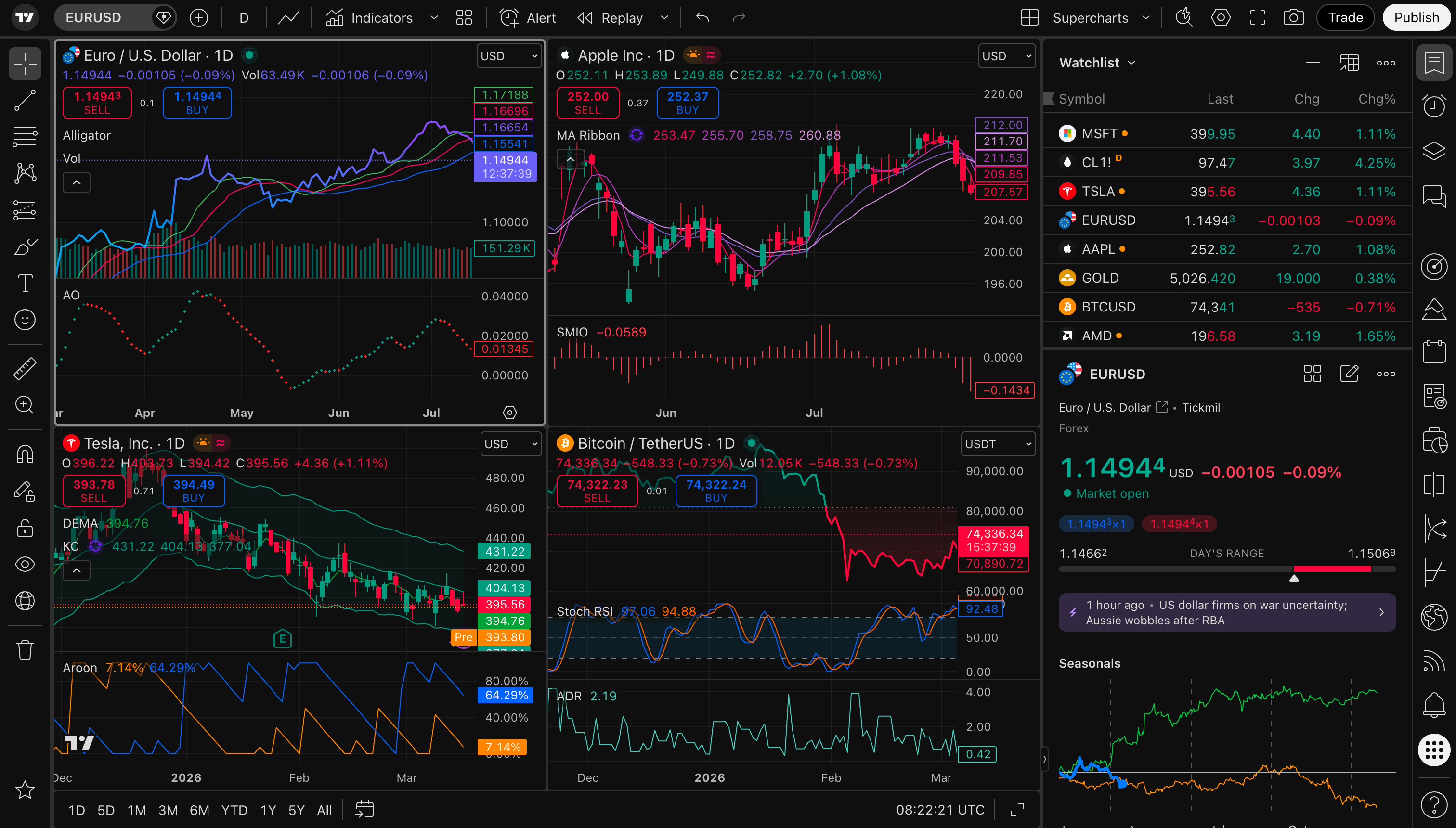

Free charts, alerts, and screeners for every asset discussed on this page. Used by 50M+ traders.
When Each Approach Works Best
Strategic allocation excels over very long horizons in relatively stable macro environments where mean reversion in asset class valuations operates reliably. It is simple, low-cost, tax-efficient, and requires minimal decision-making. Tactical allocation adds value during regime changes, extended valuation extremes, and periods of macro instability where maintaining static weights means riding drawdowns that could have been partially avoided. The evidence suggests that tactical approaches add the most value at extremes — when the macro regime is clearly risk-on or risk-off — and add the least value during ambiguous neutral periods. Most of the time, strategic allocation is sufficient, but during the 20 to 30 percent of the time when macro conditions are extreme, tactical adjustments can significantly improve outcomes.
Combining Tactical and Strategic Approaches
The most practical approach for most investors is a core-satellite structure: a strategic core that holds 70 to 85 percent of the portfolio in target-weight allocations, plus a tactical satellite of 15 to 30 percent that adjusts based on regime and macro signals. The strategic core provides stability, low turnover, and the long-term benefits of diversification. The tactical satellite captures opportunities during extreme macro environments. This hybrid avoids the extremes of both approaches — you are never fully passive during a crisis, nor are you constantly churning your portfolio based on every data point. Define clear rules for when and how the tactical allocation shifts, and stick to them mechanically to prevent emotional decision-making.
Common Tactical Mistakes to Avoid
The most damaging tactical mistake is excessive conviction — making huge allocation shifts based on a single macro narrative or forecast. Even the best regime models are wrong 35 to 40 percent of the time, so tactical bets must be sized to survive being wrong. Second, many tactical investors trade too frequently, generating transaction costs and tax bills that erode any gross outperformance. Third, tactical managers often anchor to their most recent call, holding losing positions because they do not want to admit the signal was wrong. Build automatic reversal triggers into your tactical framework. Finally, avoid confusing recency bias with regime identification — the fact that markets fell last week is not itself a regime signal, and treating every pullback as a regime change leads to chronic whipsawing.
Free charts, alerts, and screeners for every asset discussed on this page. Used by 50M+ traders.
Related Topics
Track These Indicators Live
The Alphameter synthesizes six macro indicators into a single regime score — updated daily. See the current reading and full indicator breakdown on the dashboard.
Get notified when the market regime changes
Regime alerts + weekly macro brief. Unsubscribe anytime.